Essay I

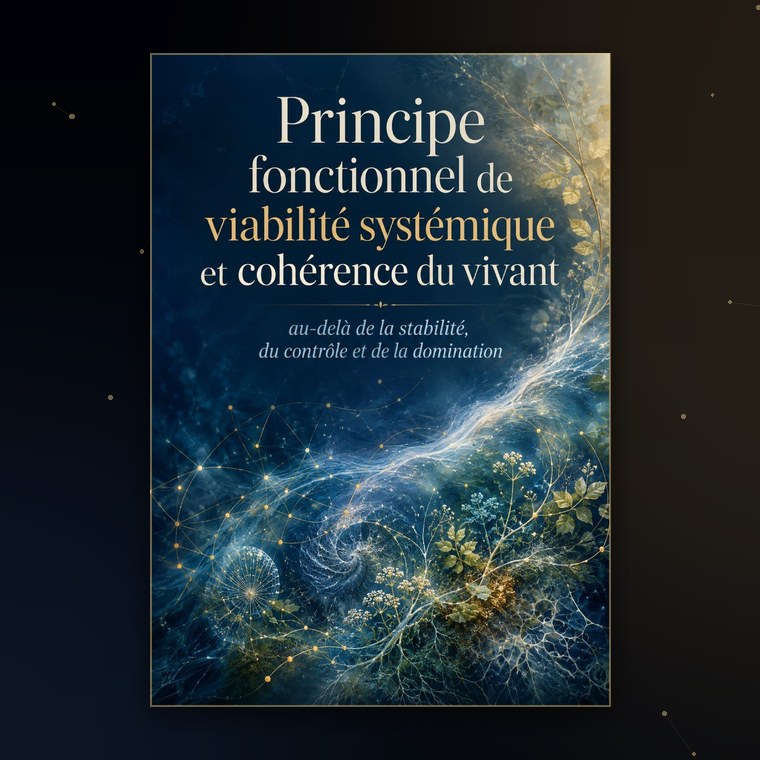
Functional Principle of Systemic Viability and Coherence of Life

What living systems teach us about coherence, instability, and the conditions for sustainability.

2026 ~25 pages
Table of contents
  • Introduction: Why stability is an illusion
  • Life as a far-from-equilibrium system
  • Coherence vs stability
  • Displaced costs and attractors
  • Implications for social systems
Read essay
Essay II

The Two Worlds — Why Stability Becomes a Structural Disease

A thermodynamic reading of chronic suffering, repetition, and psychic transitions.

2026 ~20 pages
Table of contents
  • The pattern as attractor
  • The dissipative cost of psychic stability
  • Repetition: maintenance mechanism
  • Transition thresholds and crises
  • Observation as meta-regulation
Read essay
Essay III

Compensation Zone and Viability Debt

A mathematical formalization of viability conditions for dissipative systems — from organism to civilization.

2026 ~15 pages
Table of contents
  • Viability condition for a dissipative system
  • Dissipation flux, negentropy and regeneration
  • Entropic debt: formalization and accumulation
  • Rupture thresholds and regime shifts
  • Multi-scale applications: individual, ecosystem, civilization
  • Canonical synthesis: ΦN(t) + ℛ(t) ≥ ΦD(t)
Read essay (PDF)
Essay IV

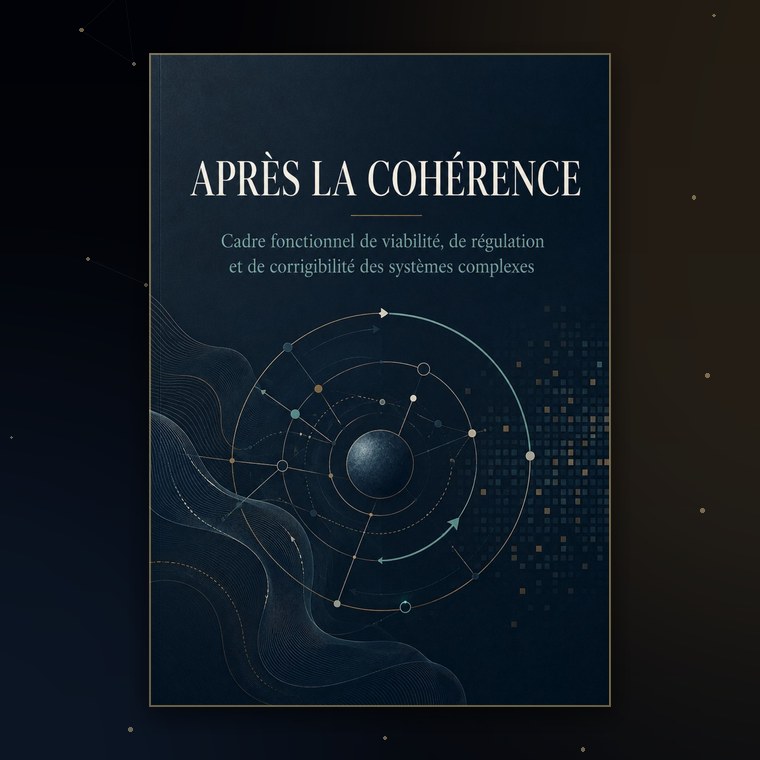
After Coherence — Functional Principle of Systemic Viability

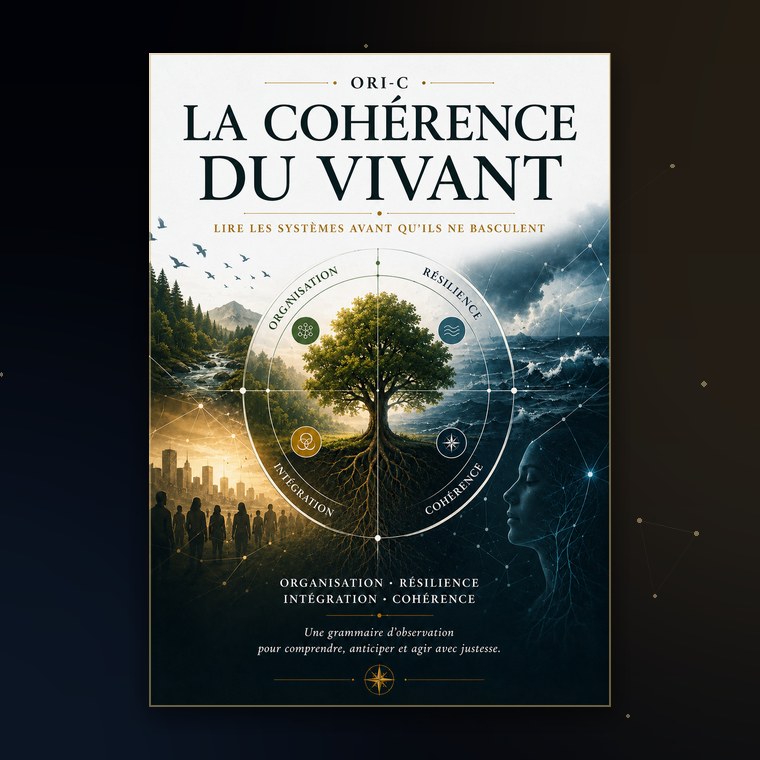
Continuation and deepening of the ORI-C framework — towards an integrated understanding of viability.

2026 Long essay
Table of contents
  • Beyond static coherence
  • The functional principle as operator
  • Viability and transition regimes
  • Applications to life and social systems
Read essay
Life does not solve. It displaces, converts, temporizes, hybridizes. Understanding this grammar means ceasing to seek definitive solutions and starting to build viable regimes.