The cosmic prior with degraded warrant
Why knowledge of the Big Bang also depends on the epoch from which one
observes
Abstract This article distinguishes the cosmic prior — that is, the initial conditions and parameters that structure the history of the observable Universe — from the local evidential warrant that allows an observer to reconstruct that prior. In a ΛCDM Universe undergoing accelerated expansion, the Big Bang does not become less true with time. What degrades are the natural channels that allow it to be inferred.
The problem is therefore neither the erasure of the past nor the destruction of information. It is a fall in warrant that combines loss of redundancy, rising noise, disappearance of certain channels, reopening of degeneracies between parameters and increased dependence on archives.
The framework distinguishes three levels. The first is general informational warrant. The second is its linear-Gaussian approximation by Fisher matrix. The third is a scalar proxy of redundancy used only for pedagogical visualisations. This distinction avoids confusing mutual information, the volume of the posterior and a mere sum of weights.
The article also introduces the notion of knowledge with degraded warrant. This is knowledge that is potentially true, coherent and inherited from an epoch of strong redundancy, but that has become weakly re-verifiable from a later epoch. Science then appears as a strategy of active conservation of reconstructibility.
Central thesis
The Big Bang is not a prior that fades. It is the local warrant for inferring it that decreases with expansion.
Keywords Big Bang, ΛCDM cosmology, cosmic microwave background, evidential warrant, mutual information, Fisher matrix, joint covariance, cosmological horizon, scientific archive, knowledge with degraded warrant.
Contents 1. Introduction. A true origin can become hard to reconstruct 2. The cosmic prior. A field of constraints, not a programme 3. The present window of cosmic legibility 4. Disappearance, degradation and under-determination 5. Knowledge with degraded warrant 6. Defining evidential warrant correctly 7. Blocks, covariances and loss of rank 8. Modelling the principal channels 9. Scale factor, characteristic times and thresholds 10. The role of archives. Two different clocks
11. Philosophical consequences 12. Conclusion. Saving reconstructibility, not truth Appendix A. Toy model with physical proxies
1. Introduction. A true origin can become hard to reconstruct We tend to think of the origin as a fact simply situated in the past. It happened, it left traces, and it would suffice to improve our instruments to know it better. This intuition works as long as the traces remain accessible, redundant and interpretable. It becomes insufficient as soon as one considers cosmic evolution over very long times.
Today, modern cosmology reconstructs the history of the Universe from several families of observations. Among them are the cosmic microwave background, the expansion of galaxies, the abundances of the light elements, the large-scale density field and the statistical signatures it contains, including baryon acoustic oscillations. These clues are not merely juxtaposed. Their strength comes from their convergence.
This situation is not eternal. In a Universe undergoing accelerated expansion, certain observational channels progressively become inaccessible or lose their discriminating power. Gravitationally unbound galaxies recede beyond the observable horizon. The cosmic microwave background cools and shifts to ever longer wavelengths. Distant structures become less available. Local traces of the hot, dense origin of the Universe remain possible, but become more ambiguous as stellar evolution transforms them.
The problem is therefore not that the Big Bang would cease to have taken place. The problem is subtler. The channels allowing a local observer to reconstruct that origin degrade. The past remains true, but its local empirical warrant decreases.
Guard-rail formula
The real does not hide. The conditions of reading degrade.
2. The cosmic prior. A field of constraints, not a programme The Big Bang can be understood as the initial field of constraints from which the observable Universe becomes possible. It does not determine every future form like a programme written in advance. It rather fixes a space of compatibility comprising the relative densities of matter, radiation and dark energy, the initial fluctuations, the temperature, the accessible energy scales and certain symmetries preserved or broken.
In the flat ΛCDM model, the Planck 2018 results give in particular H₀ close to 67.4 km s-1 Mpc-1 and Ω ₘ close to 0.315. These parameters describe the dynamic framework within which future expansion, the cosmological horizon and the long-term accessibility of distant structures are inscribed.
This cosmic prior must not be understood as an intention. It wants nothing, reveals nothing, withdraws nothing. It designates the set of initial constraints and parameters that make certain trajectories possible and exclude others. Atoms, stars, galaxies, chemistry, life and consciousness do not step outside that framework. They progressively explore its local consequences.
To say that the Big Bang is a cosmic prior therefore does not mean that everything was written. It means that everything that comes about develops within an already structured space of possibilities. The origin does not give the final form. It gives the matter, the constraints and the gradients with which forms can come about.
3. The present window of cosmic legibility We live in a cosmologically particular epoch. The Universe is old enough to have produced galaxies, stars, heavy elements, planets and observers capable of doing cosmology. It is also still young enough for the great traces of its history to remain accessible.
The cosmic microwave background is still observable. Distant galaxies still allow a distance–redshift relation to be established. The large-scale density field preserves the imprint of the primordial fluctuations. The abundances of helium, deuterium and other light elements still carry the mark of primordial nucleosynthesis. These clues are not isolated. They overlap.
Krauss and Scherrer argued that, in the far future of a ΛCDM Universe, several empirical pillars of modern cosmology would become inaccessible to observers of a gravitationally bound island universe. The cosmic microwave background, the cosmic expansion observed through distant galaxies and the direct clues of a hot, dense origin would then be far less available.
This scenario must not be read as an absolute disappearance of all evidence. It rather describes the progressive collapse of observational redundancy. A late observer would not necessarily be deprived of all traces, but would have fewer independent channels, weaker, more indirect and more ambiguous.
4. Disappearance, degradation and under-determination One must avoid the overly strong claim that there would be no evidence of the Big Bang at all in the future. That sentence is seductive, but it flattens several different phenomena.
1. Loss of causal accessibility. Unbound galaxies progressively cross the cosmological horizon. They are not destroyed. They cease to be observable from our bound region. 2. Fall in signal-to-noise ratio. The cosmic microwave background cools and shifts to ever longer wavelengths. 3. Interpretive degradation. Primordial abundances may remain measurable, but their reading becomes more ambiguous because of stellar reprocessing. 4. Loss of redundancy. The surviving channels become fewer and less independent.

Equation 1. Cooling of the cosmic microwave background with the scale factor.
The problem is therefore not the absolute absence of traces. The problem is the fall in epistemic rank. The number of independent directions available for constraining parameter space diminishes.
A late civilisation could inherit a correct cosmology without being able to re-verify it with the same force. It could possess archives asserting that the Universe went through a hot, dense phase, yet no longer have the same natural channels to corroborate that assertion independently. This would not be exactly a mythology. It would be knowledge with degraded warrant.
5. Knowledge with degraded warrant Between two classical categories — strongly corroborated science and unverifiable belief — an intermediate category must be introduced.
Knowledge with degraded warrant is knowledge that may be true, coherent, rigorously transmitted and even partly corroborated, but that can no longer be re-verified with the same degree of independence as at the time it was established.
This concept is essential for thinking about late cosmology. A theory may have been strongly tested in an epoch of high observational redundancy and then become harder to test in a later epoch. Its truth does not change for all that. What changes is its regime of warrant.
The boundary between science and belief therefore does not blur because science would become myth. It blurs because the conditions of re-verification degrade. The problem is not that the true becomes false. The problem is that the true becomes hard to reconstitute independently.
Science then becomes more than a method of discovery. It becomes a strategy of active conservation of reconstructibility. Its task is not only to produce results that are true today. It must also record, document, transmit and render auditable the conditions under which those results were obtained.
6. Defining evidential warrant correctly The object to be formalised is not the cosmic prior itself. The prior refers to the initial conditions, written Θ₀. The relevant object is the local evidential warrant available at a given cosmic epoch.
The canonical definition uses mutual information. In this document, MI denotes that mutual information, in order to avoid any typographic confusion with a mere sum of weights.

Equation 2. General definition of evidential warrant.
The variable Θ₀ designates a set of parameters or initial conditions. The variable D_local(a) designates the set of locally accessible data when the scale factor equals a. Mutual information is suited to this role, since it also captures non-linear dependences and does not depend on an arbitrary choice of coordinates in parameter space.
This definition avoids any confusion between truth and access. The Big Bang does not disappear if G(a) decreases. What decreases is the information locally available for inferring it.
In a linear-Gaussian approximation with a Gaussian prior of covariance Σ₀, the informational warrant can be related to the Fisher matrix. One then obtains a difference of uncertainty volumes between prior and posterior.

Equation 3. Linear-Gaussian link with the volume of the posterior.
The equivalent form of equation 3 expresses the same ratio of volumes and gives the mutual information in the linear-Gaussian case. Written as a difference of entropies, the prior constant is explicitly subtracted. If one uses only log det F, the constant tied to the prior is lost. This relation is not a general identity. It presupposes a local linearisation of the model and approximately Gaussian noise.
If the data blocks are independent or already decorrelated, the Fisher matrix can be written as a block-by-block sum.

Equation 4. Additive form under the assumption of independent blocks.
This sum presupposes that the blocks b are mutually uncorrelated. In the presence of cross-covariance between blocks — for example between CMB and large-scale structure through the ISW effect or lensing — a full joint covariance must be used.
The factors p_b(a) therefore modulate the Fisher contribution of block b. They are not weights separate from the sensitivity J_b or from the covariance Σ_b. They represent an effective accessibility of the block within the chosen approximation.

Equation 5. General form with full joint covariance.
Equivalently, if the observables are written by blocks db and dc, the full covariance contains the cross terms Cov(db,dc). This form is more robust than the additive sum when the observables share a common physical origin or a common statistical field. The notation Cov(db,dc) designates the covariance between the data vectors of blocks b and c.

Equation 6. Explicit form with cross-covariance between observables.
For the visualisations, a scalar proxy may be introduced. It measures neither general mutual information nor the real volume of the posterior. It serves only to visualise the depletion of the blocks.

Equation 7. Scalar proxy of redundancy, reserved for visualisations.
The functions p b (a) are relative scale factors. They are bounded between 0 and 1. They are not probabilities and their sum has no absolute significance. They do not claim to model cross-covariance between blocks. The weights w b are relative weights chosen for a figure or a toy simulation.
7. Blocks, covariances and loss of rank Evidential warrant depends on the real diversity of channels, not on the number of names given to the same data.
One must avoid counting large-scale structure and BAO separately as two independent channels. Baryon acoustic oscillations are a particular signature of the large-scale density field. They appear in the power spectrum or the correlation function of galaxies. They do not constitute an entirely separate channel.
The form with cross-covariance given above is the explicit writing of the Fisher matrix when several blocks of observables are available and their possible correlations must be preserved.
A cleaner decomposition of the data blocks comprises the CMB, the distance–redshift relation, primordial nucleosynthesis, the large-scale density field, residual channels and archives.
Within the large-scale structure block one may gather the power spectrum P(k), the correlation function ξ(r), the BAO, structure growth, redshift-space distortions and possibly weak lensing. These sub-observables must be treated with a joint covariance rather than as independent channels.
The disappearance of a channel does not merely remove one item of evidence. It can reopen degeneracies between parameters. A channel may strongly constrain a combination of parameters without constraining the parameters individually. Another independent channel may lift that degeneracy. If this second channel becomes inaccessible, the geometry of the posterior changes.
Mathematical consequence
The degradation of warrant is not a simple subtraction of evidence. It is a loss of rank, a rise in degeneracies and a fall in redundancy.
8. Modelling the principal channels
8.1. The cosmic microwave background The CMB must not be modelled as a sudden death. Its accessibility depends on a signal-to-noise ratio. A practical bounded form consists in writing a factor p CMB between 0 and 1.

Equation 8. Bounded accessibility factor for the CMB in a toy model.
This expression combines a function bounded between 0 and 1 with a CMB cooling law. The parameter SNR₀ designates the signal-to-noise ratio evaluated today, at a₀. For a fixed instrumental noise and a given local environment, this law expresses the fact that the thermal amplitude of the background decreases as 1/a. In a real study, this factor should be replaced by a model of astrophysical, instrumental and observational noise.
8.2. The distance–redshift relation The Hubble flow becomes hard to establish when gravitationally unbound objects leave the observable horizon. This can be modelled by the effective number of accessible extragalactic tracers.

Equation 9. Accessibility factor of the distance–redshift relation.
In this stylisation, N_min designates the minimal threshold of tracers required to extract a usable distance–redshift signal. When that number becomes too small, the channel does not logically disappear. It loses its statistical power.
8.3. Primordial abundances The abundances issuing from primordial nucleosynthesis are not a sharp-cut-off channel. They degrade through chemical pollution and stellar reprocessing.
Equation 10 uses w_BBN(a) as an unnormalised Fisher weight. In the appendix, the figures use a bounded proxy p_BBN(a) to visualise the relative legibility of the channel. The two notations therefore do not have the same status.

Equation 10. Effective weight of the BBN channel with stellar pollution.
This channel is durable, but increasingly ambiguous. It does not necessarily supply obvious autonomous evidence of a hot Big Bang. It may become an under-determined local trace.
8.4. The large-scale density field The LSS block gathers several sub-observables. A stylised weight may depend on the accessible effective volume, on the density of tracers and on the power spectrum.

Equation 11. Stylised weight of the large-scale structure block.
Here V_eff designates the comoving volume accessible, weighted by the density of tracers actually probed by the available galaxies. It therefore includes the fraction of the observable volume that is genuinely exploitable. P(k) designates the power spectrum at a reference scale. In a Λ-dominated universe, the physical radius of the future event horizon tends toward a constant value of order H_Λ^{-1}, while the associated comoving radius decreases as a^{-1}. In a toy model with constant comoving density, this justifies a decrease of the effective volume as a^{-3}. This quantity does not represent the instantaneous visual catalogue of objects still visible, but the causal volume useful for constituting new exploitable cosmological constraints.
In the figures, p_LSS(a) is normalised to 1 at a0. This normalisation serves only to compare the channels on the same graphical scale.

Equation 12. Toy law for the accessible effective volume.
8.5. Residual channels Room must be kept for residual or exotic channels. Loeb proposed that hypervelocity stars escaped from Milkomeda could still serve as cosmological tracers in a very distant future. Other possible channels include primordial gravitational-wave backgrounds or fossil signatures of inflation, even if their future accessibility remains uncertain.
These possibilities do not refute the degradation of warrant. They make it more precise. Even if residual channels survive, they do not necessarily replace the massive redundancy available today. They supply a narrower warrant, more dependent on assumptions and more fragile.

Equation 13. Difference between absence of warrant and strongly diminished warrant.
9. Scale factor, characteristic times and thresholds The natural variable of the model is not primarily proper time t, but the scale factor a, or its logarithm N.

Equation 14. Number of e-folds of the scale factor.
Under domination by a cosmological constant, expansion becomes approximately exponential.

Equation 15. Asymptotic expansion under Lambda domination.
Rather than speaking of a half-life, it is more prudent to define a half-warrant threshold or a characteristic time. This threshold is a convention. It does not imply that the decrease is exponential.

Equation 16. Half-warrant threshold for informational warrant.

Equation 17. Half-warrant threshold for the pedagogical proxy.
In a toy case where the only relevant channel were the number of accessible galaxies, with N_gal(a) proportional to a^{-3}, the half-warrant threshold would be given by a_{1/2} = 2^{1/3} a₀. This example shows that the decrease may follow a power law in a, and not an exponential law in proper time.

Equation 18. Toy example of a threshold for a volume-diluted channel.
Under Λ domination, if a is proportional to exp(Ht), this threshold corresponds to an additional time Δt = ln 2 / 3H. In the Λ-dominated regime, one may take H close to H₀ multiplied by the square root of Ω_Λ, which gives an order of magnitude of about four billion years. This number is merely illustrative.
One may also define an epistemic horizon as the scale factor beyond which the informational warrant falls below a critical threshold. For example, one may set a threshold when the volume of the posterior exceeds ten times the present volume. This choice is arbitrary and must be declared.

Equation 19. Operational criterion for the inflation of the posterior volume.
One possible choice is η = ln 10, representing a posterior ten times larger than the present one. This threshold is conventional. It may be set otherwise according to the context, the parameter domain adopted and the degree of confidence required. Since the criterion compares relative posterior volumes, it bypasses the additive constant tied to the prior.
10. The role of archives. Two different clocks If natural warrant decreases, then archives become a component of the epistemic system. But they must not be treated naively as an independent channel of the same status as a natural observation.
Natural channels degrade mainly with the scale factor a. Archives, for their part, degrade according to a transmission clock, written τ. That clock depends on the lifetime of supports, the continuity of institutions, the stability of languages, the legibility of units, the preservation of software and the maintenance of audit protocols.
The relation between τ and a is not fixed by the model. At the same scale factor a, an archive may be recent or old depending on when it was produced, copied and transmitted. This separation is deliberate. Cosmic expansion obeys a physical dynamic, whereas archival history depends on a civilisational trajectory.

Equation 20. Total warrant at the general informational level.
In the Fisher approximation, simple addition between archive and natural data presupposes independence between blocks. It can serve as a first approximation.

Equation 21. Additive approximation with cosmological clock and archival clock.
If the archive contains old measurements correlated with still observable natural data — for example old CMB maps compared with a residual CMB — a full joint covariance must be used. In that case, the archive is not an independent block.

Equation 22. Form with cross-covariance between natural data and archives.
The factor λ_audit(τ) measures the remaining quality of the audit chain. It does not represent a physical law, but a sociotechnical scenario of conservation, maintenance and audit. It shows how a stabilised memory can slow the loss of observational warrant, without itself constituting a new direct cosmological observable.

Equation 23. Effective decay of audit quality.
An archive may also be regularly copied, restored, migrated to new supports, enriched with metadata or rendered more auditable. A maintenance rate m(u) is then introduced.

Equation 24. Audit quality with active maintenance and a practical bound.
The min bound is a practical bound, not a physical law. It prevents audit quality from exceeding 1. A smooth saturation could be used in a more detailed model. Here h represents the risks of loss or obsolescence, while m represents active preservation.
Archives are not merely raw data. They also contain models, calibrations, units, choices of parameterisation, software and conventions of interpretation.
The loss of the audit chain can therefore become a loss of meaning, even if the material support survives.

Equation 25. Fisher approximation with archive weighted by its audit chain.
Structural point
Natural warrant and archived warrant do not degrade on the same clock. The first follows cosmological expansion. The second depends on the material, technical and institutional continuity of transmission.
11. Philosophical consequences This cosmological analysis illuminates a more general problem. A system can integrate its origin only if the traces of that origin remain accessible, interpretable and transmissible.
It connects with classical debates in the philosophy of science, notably the problem of under-determination. A theory is never tested in isolation. It is tested along with auxiliary hypotheses, instruments, noise models and interpretive procedures. Duhem and Quine gave classical formulations of this difficulty. In cosmology, authors such as George Ellis have likewise insisted on the particular status of a science that studies a unique, historical Universe limited by horizons.
The notion of knowledge with degraded warrant does not replace these debates. It shifts them toward a temporal question. What becomes of a true or strongly corroborated theory when the natural conditions of its re-verification partly disappear?
On the cosmic scale, some epochs of the Universe are more favourable than others to the reconstruction of the origin. We are situated in a window where the great traces of the Big Bang are still accessible redundantly. A far later civilisation could be more advanced technically yet less well placed cosmologically.
This idea overturns a naive intuition of progress. Later does not always mean better informed. A later system may inherit a world technically richer but poorer in traces of the origin.
The concept can also be extended to other fields. Natural history, geology, archaeology and certain social sciences already work with degraded, incomplete or hard-to-re-verify traces. The cosmological case provides an extreme limit of this, since the degradation of the traces is bound up with the global dynamics of the observable Universe.
General consequence
The origin does not cease to act when it becomes hard to read. But a system that wants to understand its legacy must do so while the traces are still sufficiently numerous, independent and interpretable.
12. Conclusion. Saving reconstructibility, not truth The Big Bang, as event or initial regime, does not become less true with time. What changes is the local capacity of an observer to reconstruct the evidence for it.
The right question is therefore not whether the Universe erases its origin. The right question is how the evidential warrant for inferring that origin evolves.
Evidential warrant is the mutual information between the initial conditions and the data locally accessible at a given epoch. In a ΛCDM future, this natural warrant tends to decrease as independent channels grow scarce, as some cross the horizon, as others fall below threshold, and as local traces become more ambiguous.
But this decrease does not reduce to a simple subtraction of evidence. When a channel disappears, it is not merely a weight that goes. An entire direction of parameter space can become degenerate again. The loss of warrant is a loss of rank, a rise in correlations, a fall in redundancy and an increase in under-determination.
This degradation can be partly compensated by archives, measurements, protocols, models and scientific transmission. But the archive itself must remain auditable. Without a chain of verification, it may preserve a true assertion while progressively losing its force of warrant.
The decisive category is therefore neither myth nor absolute proof, but knowledge with degraded warrant. This is knowledge that is potentially true, inherited from an epoch of strong redundancy, but that has become weakly re-verifiable from a later epoch.
The cosmic prior remains ontologically inscribed in the history of the world. What is lost, if nothing preserves it, is the local richness of the means of reconstructing it.
Closing sentence
Knowledge is not only a matter of intelligence. It is also a matter of temporal window.
Appendix A. Toy model with physical proxies This appendix replaces the arbitrary functions of the visualisation model with proxies tied to identifiable phenomena. It does not constitute a complete cosmological simulation. It serves to check the internal coherence of the framework and to show which physical mechanism causes each channel to lose warrant.
Status of the results
The figures and thresholds below are toy-model results. They must not be read as robust numerical predictions. Their interest is to replace an abstract decrease with explicit mechanisms, channel by channel.
A.1. Proxies adopted
Channel Physical proxy Interpretation
CMB T_CMB(a) = T₀/a Cooling and redshift of the cosmic microwave background
Causal volume χ_EH(a) Future event horizon and useful causal volume
Galaxies N_gal(a) = N₀ p_V_eff(a) p_lum(a) Accessible and detectable tracers
BAO / LSS p_V_eff(a) and shot noise Loss of the statistical standard ruler
BBN p_BBN(a) = exp[-Z(a)/Z_crit] Chemical pollution of primordial abundances
Archives λ_audit(τ) Material, technical and cultural stability
The functions p_b(a) remain proxies normalised between 0 and 1. They are not probabilities and their sum has no absolute significance. They serve to feed a toy Fisher matrix and a redundancy proxy.

Equation A1. Cooling of the cosmic microwave background.

Equation A2. Comoving event horizon used for the volume proxy.

Equation A3. Proxy of the useful causal volume.

Equation A4. Accessible galactic tracers in the toy model.

Equation A5. Interpretive degradation of primordial abundances.
A.2. Control figures The volume V_eff does not represent the instantaneous visual catalogue of objects still visible. It represents the causal volume useful for producing new exploitable cosmological constraints. This clarification matters, because the proxy based on the comoving event horizon can fall rapidly without meaning that all old images of galaxies immediately disappear from the sky.
All the curves shown in the appendix figures are normalised to 1 at a0 where that normalisation is relevant. The numerical values must be read as indicative thresholds of the toy model, not as robust cosmological predictions.
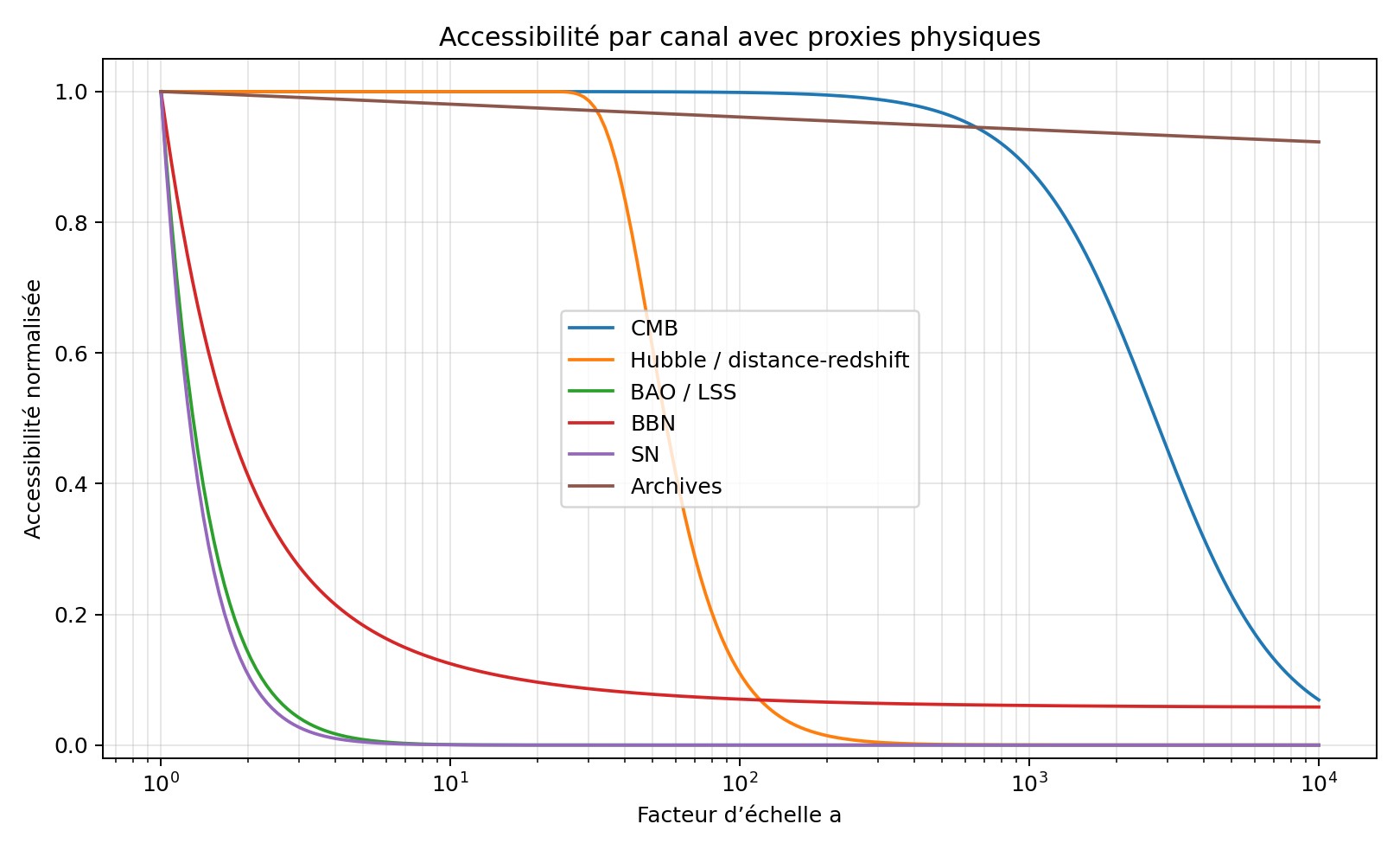
Figure A1. Relative accessibility of the channels in the toy model with physical proxies.
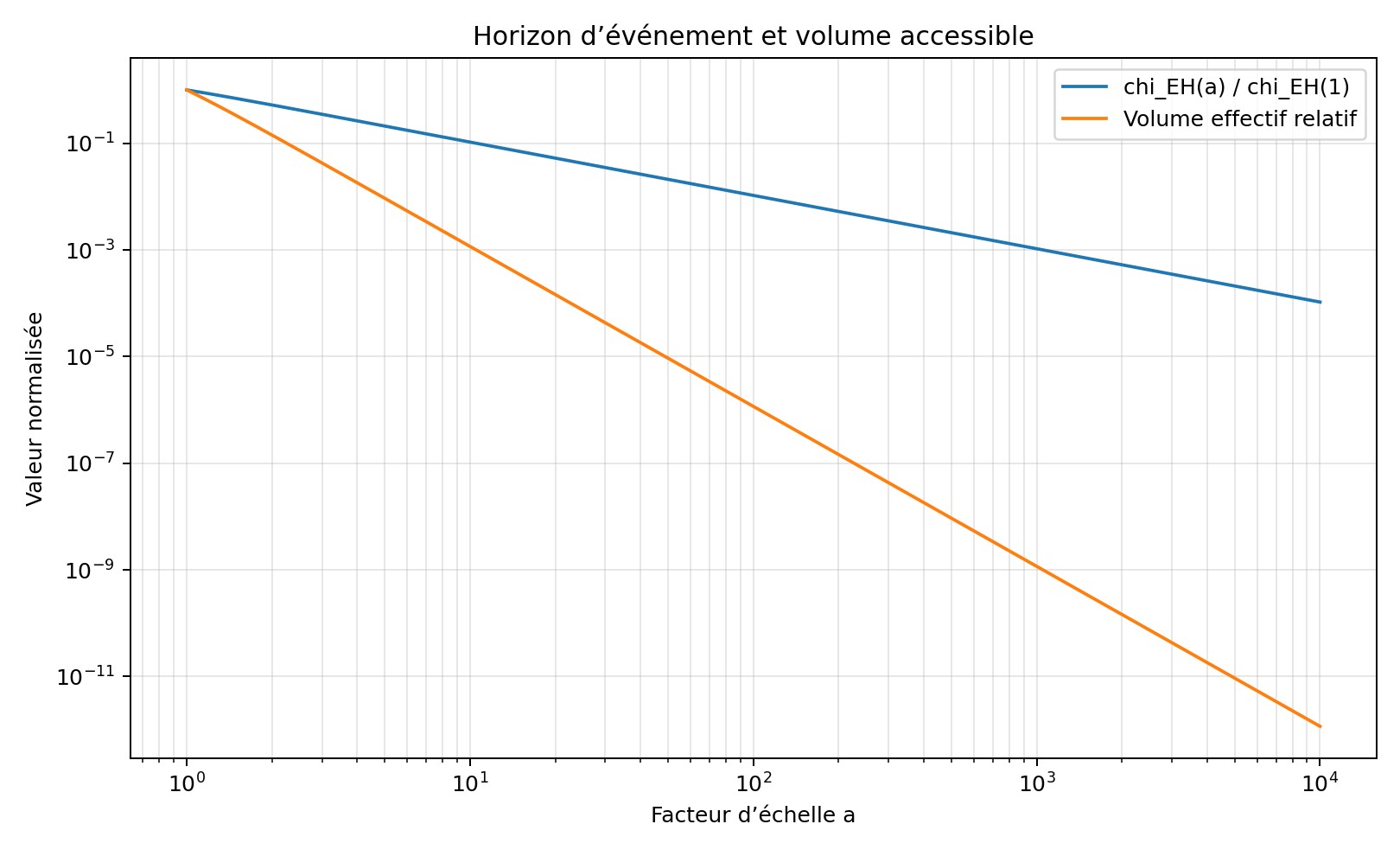
Figure A2. Comoving event horizon and proxy of the useful causal volume.
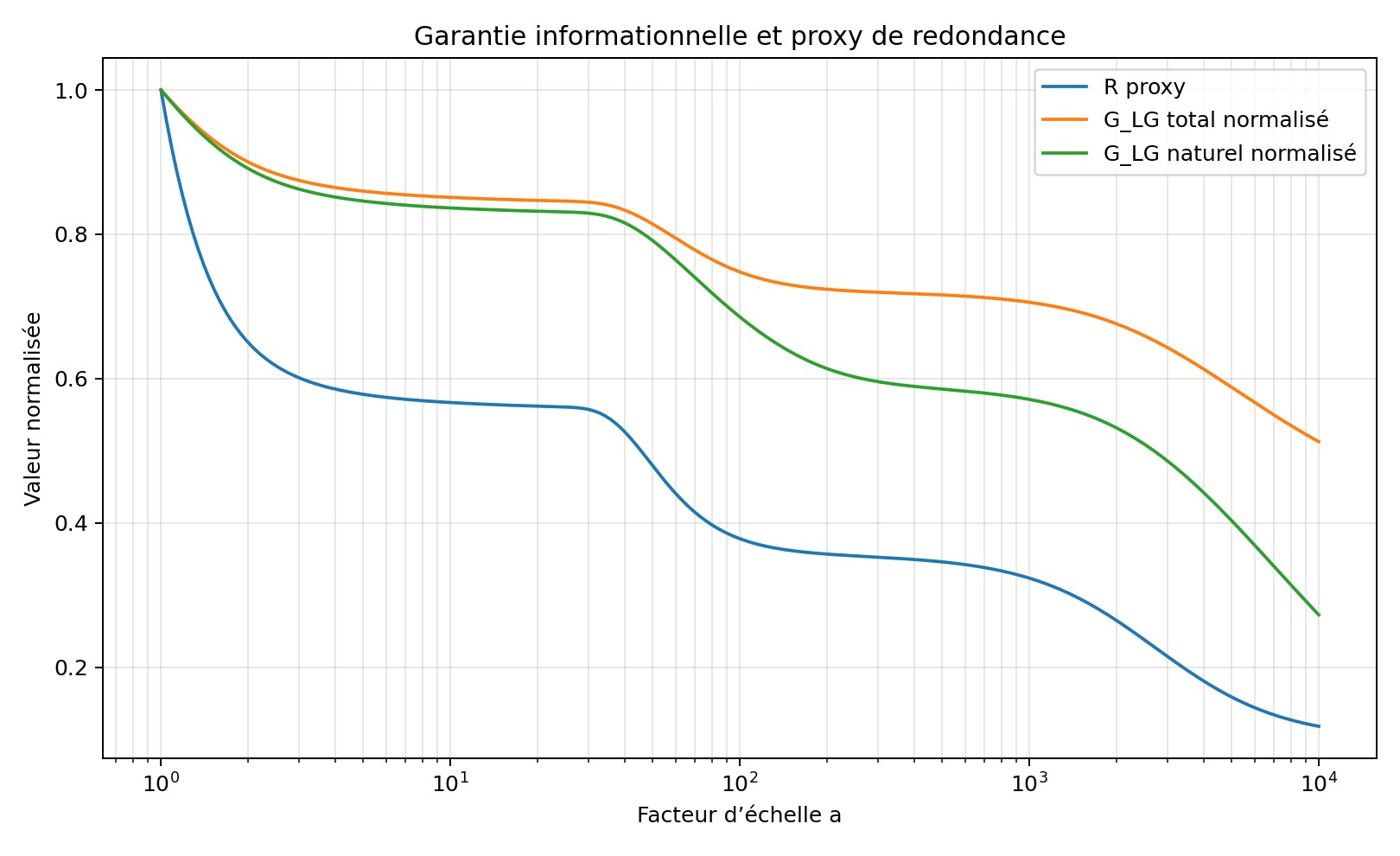
Figure A3. Linear-Gaussian informational warrant with and without archives.
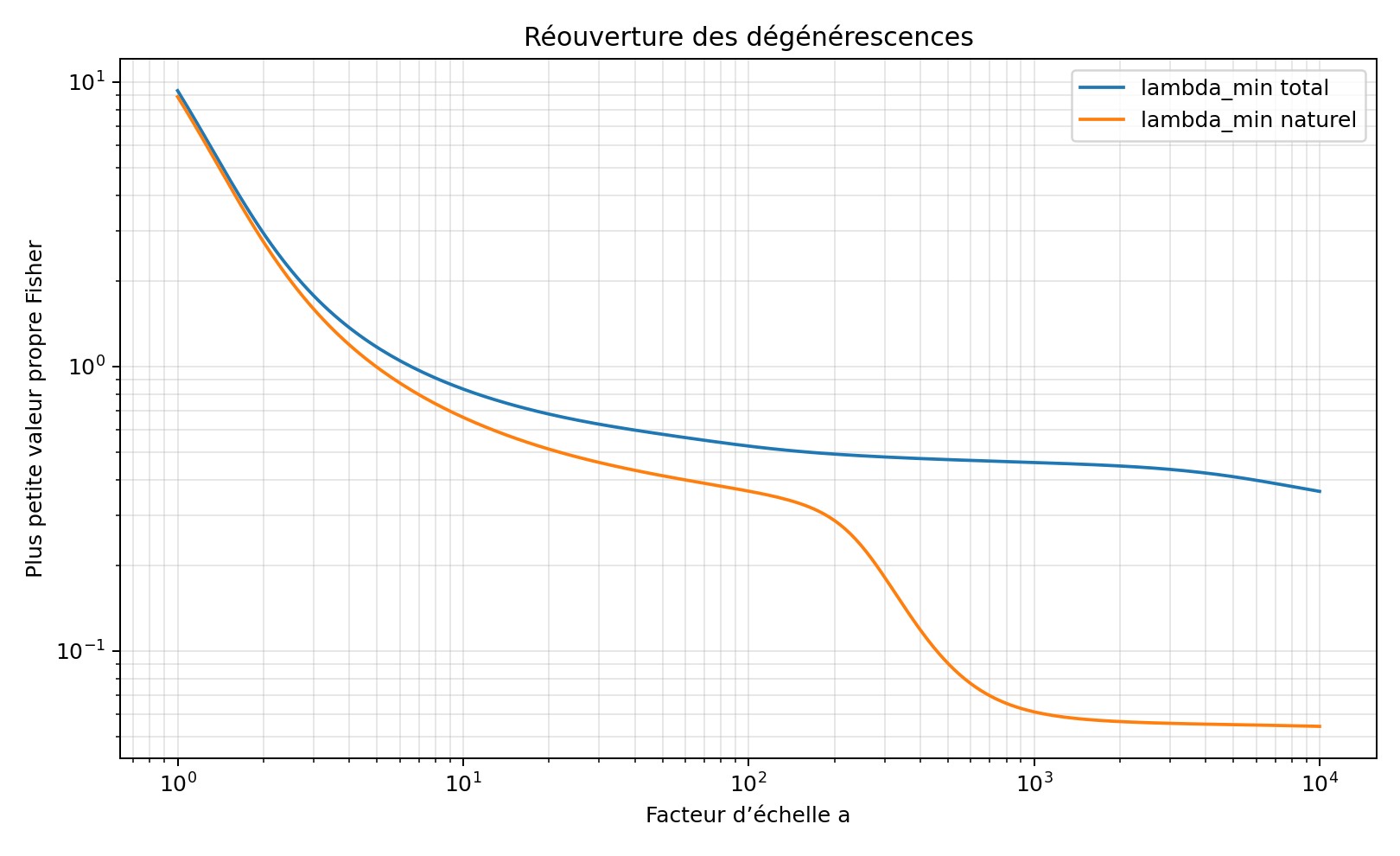
Figure A4. Minimal eigenvalue of the toy Fisher matrix. It illustrates the reopening of degenerate directions.
A.3. Indicative thresholds
Quantity 50% threshold in a Indicative time in Gyr
CMB 2832 138
Distance–redshift 56.7 69.6
BAO / LSS 1.34 4.52
BBN 1.73 8.68
Supernovae 1.29 3.85
Archive not reached not reached
Proxy R 45.9 65.9
G_LG natural 2715 137
G_LG total not reached not reached
These thresholds depend on the choices of the toy model. The BAO / LSS channel falls quickly in this test because it is strongly tied to the useful causal volume. This does not mean that galaxies immediately cease to be visible. It means that the statistical power available for reconstructing a large-scale cosmology rapidly becomes less favourable within this proxy.
The times given in the table are calculated within a ΛCDM model using the Planck 2018 parameters. They give orders of magnitude internal to the chosen physical proxy.
In the scenario computed, λ_audit remains above 0.9 up to a = 10000. This result must not be read as a law of nature. It corresponds to an optimistic scenario of continuous audit in which the maintenance rate nearly compensates the degradation rate. It shows what a very active conservation could preserve, not what it will necessarily preserve.
The reproducible file associated with this appendix preserves the CSVs and the figures. It allows the instrumental thresholds, characteristic times, channel weights and archive scenario to be modified without changing the theoretical framework of the article.
A.4. Sensitivity levers of the model Two simple levers make it possible to test the sensitivity of the model without changing its structure.
The first concerns the coupling of the BAO / LSS block to the useful causal volume. In the script, p_BAO depends mainly on p_Veff and on the number of tracers. To represent a stricter loss of rank, one may replace this linear coupling by a harsher power of p_Veff, or explicitly cancel a direction of the Fisher matrix associated with poorly constrained three-dimensional modes.
The second concerns the severity of the archive scenario. In the reference version, audit risk is largely compensated by maintenance. By raising the raw risk h_audit, for example toward 0.008 in the script's units, one obtains a more punitive scenario allowing one to look for the scale factor at which the loss of technical memory meets the loss of natural signal.
These variants are not independent observational tests. They are robustness tests of the toy model. Their role is to check which conclusions depend strongly on the parameters chosen and which remain stable when the assumptions are hardened.
Indicative references Planck Collaboration. Planck 2018 results. VI. Cosmological parameters. arXiv:1807.06209. Lawrence M. Krauss and Robert J. Scherrer. The Return of a Static Universe and the End of Cosmology. arXiv:0704.0221. Abraham Loeb. Cosmology with Hypervelocity Stars. arXiv:1102.0007. Max Tegmark. Measuring Cosmological Parameters with Galaxy Surveys. arXiv:astro-ph/9706198. Alan Heavens. Statistical techniques in cosmology. arXiv:0906.0664. George F. R. Ellis. Issues in the Philosophy of Cosmology. arXiv:astro-ph/0602280. Kyle Stanford. Underdetermination of Scientific Theory. Stanford Encyclopedia of Philosophy. Pierre Duhem. La théorie physique. Son objet et sa structure. 1906. W. V. O. Quine. Two Dogmas of Empiricism. 1951. T. M. Davis and C. H. Lineweaver. Expanding Confusion: Common Misconceptions of Cosmological Horizons and the Superluminal Expansion of the Universe. Publications of the Astronomical Society of Australia, 21(1), 97-109, 2004.